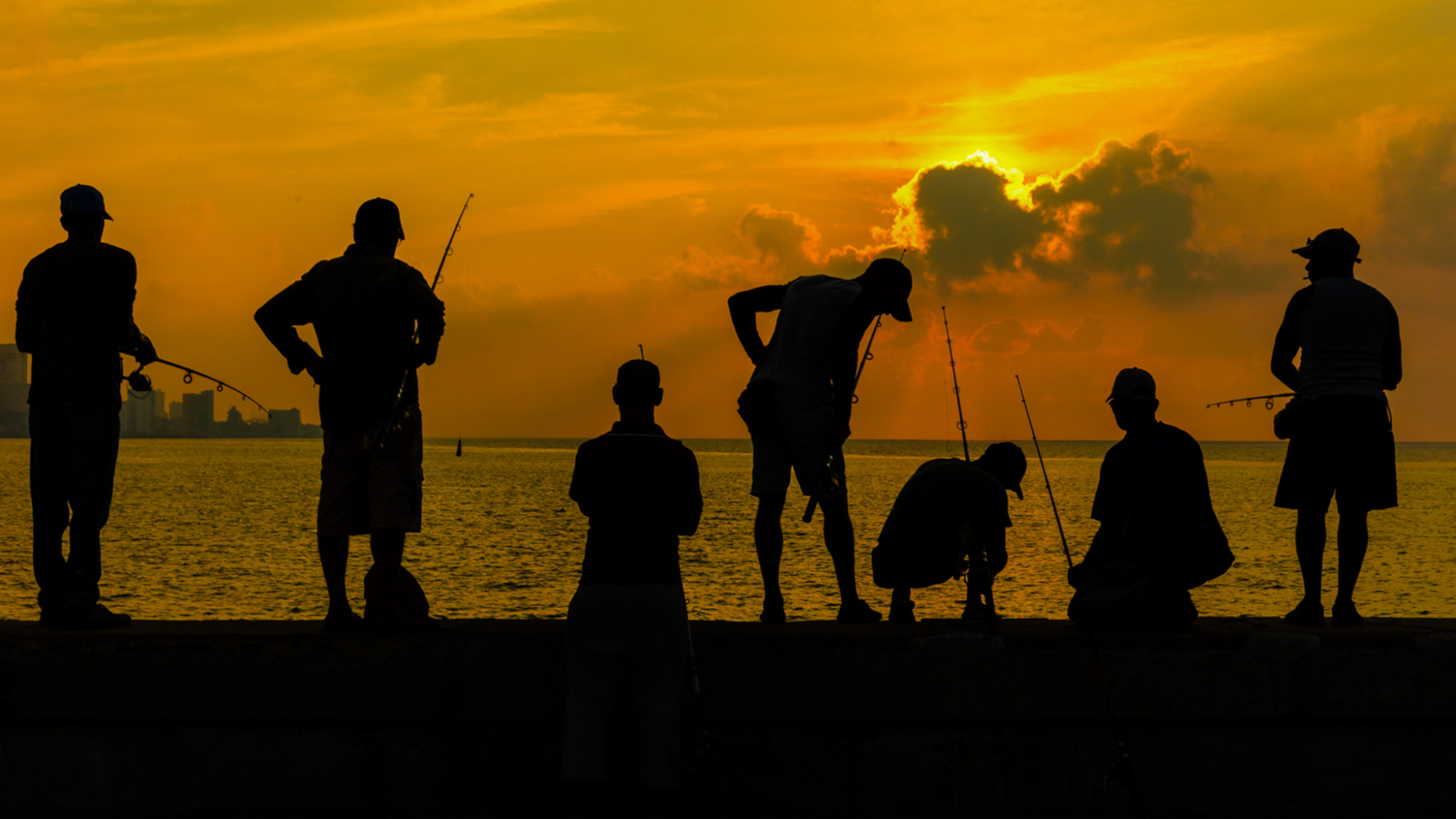
There are photographs you spend months planning — the location scouted, the light calculated, the composition rehearsed. And then there are the ones that simply happen, if you’re paying attention. This image, made along the Malecón in Havana during the summer of 2017, belongs entirely to the second category. It is, without question, one of the most significant frames I’ve ever made. And I almost walked right past it.
Havana Malecón sunset photography has become something of a genre in itself — thousands of cameras pointed at that legendary seawall every year, chasing the same golden magic. But what I experienced that evening wasn’t about chasing anything. It was about slowing down long enough to actually see.
Two Weeks in Downtown Havana
I spent two weeks living in downtown Havana in 2017, outside the tourist circuits and well away from the colonial guesthouses most visitors cycle through. The apartment was modest. The neighborhood was real. My neighbors had lived on the same block for decades, and the rhythms of the city — the way the morning unfolded, the way the heat changed the pace of an afternoon, the way the evenings pulled people outside — weren’t performed for anyone. They just were.
Every day I walked with my camera. No shot list, no itinerary. Just a loose direction and a willingness to be wrong about where things were headed. That kind of wandering is, I’d argue, the only honest approach to travel photography in a place like Havana — a city that’s been so extensively photographed that the temptation to reproduce what you’ve already seen is real and constant. I tried to resist it.
Some days the walking produced nothing. Other days it produced everything.
The Malecón at the End of the Day
The Malecón is Havana’s front porch. That might sound like a simplification, but it isn’t. The five-mile seawall that runs along the northern edge of the city is where Havana goes to breathe — couples, teenagers, musicians, vendors, old men with cigars, kids with nowhere else to be. It absorbs the city’s energy and reflects it back out over the water.
I had been there before during this trip. Midday, when the light was flat and harsh and unforgiving. I’d made some frames but nothing that moved me. I went back that evening without any particular expectation, other than that the light at sunset tends to be worth showing up for.
What I didn’t expect was the seven men.
They were spread along a section of the wall — some standing, some crouching, one sitting completely still. All of them had fishing lines in the water. They were talking to each other, not paying any attention to the sun dropping behind them, certainly not paying attention to me. This was not a special occasion for them. It was Tuesday. Or Wednesday. It was just another evening on the Malecón, the way it had been for years.
I stopped walking.
Why This Moment Worked Visually
The light was almost gone. The sun had dropped to just above the horizon line, and the sky had turned a deep, saturated amber — not the pastel softness of early golden hour, but something harder and more intense. A single cloud formation hung directly above the sun, catching the light from below and glowing like something set on fire from the inside.
Because the light source was behind the fishermen entirely, the men were rendered as pure silhouette. No face, no expression, no detail. Just shape and posture. And what struck me immediately was how much those shapes communicated even without any of those things. The man leaning forward, hands on knees, staring at the water. The one standing straight with his rod held loose at his side. The one crouching low, working at something. Seven distinct postures, seven different relationships to the moment.
In silhouette photography, gesture is everything. When you strip away texture and color and facial expression, what’s left is the body itself — how it holds itself, what it’s doing, what it’s waiting for. These seven men, without even knowing it, had arranged themselves into a composition that felt both completely accidental and completely inevitable.
The Havana skyline was just visible across the water to the far left, barely a suggestion. It grounded the image geographically without overwhelming it. That faint outline was enough.
On Waiting Instead of Chasing
There’s a tendency in travel photography — especially in a place as visually charged as Havana — to keep moving. To believe that the better image is always somewhere ahead, around the next corner, down the next street. I understand that impulse. I’ve followed it plenty of times.
But some of the strongest images I’ve made have come from doing the opposite: stopping, committing to a scene, and waiting to see what it becomes.
That evening on the Malecón, once I stopped, I didn’t move for probably twenty minutes. I made a few frames early, before the light had fully committed. I made adjustments. I waited for the postures to shift, for the cloud to move, for the sky to deepen. I watched the scene change in small increments, and I kept shooting, knowing that the best version of this image hadn’t happened yet.
When it did, I knew. There’s a particular kind of stillness that comes with that recognition — not excitement, exactly, but certainty. The frame was there. I’d found it by staying put.
That patience is, I think, the most underrated skill in documentary photography and street photography. The technical side can be learned relatively quickly. Learning to slow down, to resist the pull of the next thing, to trust that what’s in front of you is worth your full attention — that takes much longer.
What Havana Street Photography Actually Requires
Cuba photography presents a specific set of considerations that don’t apply everywhere. People are not props. In Havana especially, where the city’s image has been commodified and romanticized so aggressively by outside observers, the difference between genuine documentary work and exploitation is meaningful, and it starts with how you approach people.
I didn’t ask permission that evening, because the men were at a distance and absorbed in their own world. But I also wasn’t sneaking. I was simply present, as any person walking the Malecón would be. The image isn’t intimate — it’s observational. The silhouette itself creates a kind of respectful distance: these men are recognizable as human beings engaged in a shared, ordinary activity, but they are not individually identifiable. Their privacy is intact.
That felt right to me. Not every photograph needs to be a close encounter. Sometimes the most honest image is the one made from where you actually were, showing what you actually saw.
Closing: Why This Image Still Matters to Me
I’ve made photographs in a lot of places. Some of them are technically better than this one — sharper, more controlled, more deliberately constructed. But when I think about the images that have stayed with me as a photographer, this one comes back consistently.
Part of it is the light, which is simply extraordinary and which I had nothing to do with creating. Part of it is the composition, which came together in a way I couldn’t have planned. But mostly it’s the feeling the image carries — the sense of an ordinary human moment held inside something larger. Seven men fishing. The sun going down. The city behind them, the sea in front. Nothing remarkable about it, and everything remarkable about it.
That tension is, to me, what documentary photography and travel photography at their best are actually about. Not the exotic. Not the spectacular. The simple fact of people living their lives, and the occasional grace of being in the right place to see it clearly.
Havana gave me a lot of those moments in those two weeks. This one I’ll carry for a long time.
All images © Mark A. Middleton. markamiddleton.com
Shot on location, Malecón, Havana, Cuba, 2017.