There are places I visit and places I return to. Cape Cod falls firmly in the second category…and has for most of my adult life. I’ve camped there in August heat and in the dead of winter, stayed in friends’ homes on the bay side, and spent nights in places where the sheets were ironed and the dining room had a water view. The mode of travel has changed depending on the year and the season. The pull of the place has never changed at all.
Cape Cod photography has become, over the years, something I plan around rather than tack on. I go knowing I’ll come back with images I couldn’t have predicted, because that’s the nature of a place this particular. The light here doesn’t behave the way it does elsewhere. The landscape carries a kind of accumulated weight, centuries of weather, of working waterfront life, of people who stayed and people who just passed through. All of that shows up in the photographs, if you’re paying attention.
A Place That Looks Different Every Time
The images in this post weren’t made on a single trip. They come from different visits over the years, different seasons, different states of mind. That’s part of the story I want to tell here, not just what Cape Cod looks like, but what it feels like to return to the same place repeatedly and find it both completely familiar and somehow new each time.
The Outer Cape is where I always end up gravitating. Truro, Wellfleet, Provincetown, that narrow finger of land curling out into the Atlantic, where the dunes get bigger and the trees get smaller and the sky starts to feel like the dominant feature of the landscape. It’s a different kind of New England than most people picture. Wilder, more elemental, less curated.
I’ve never left it without wanting to come back.
The Dunes at Golden Hour
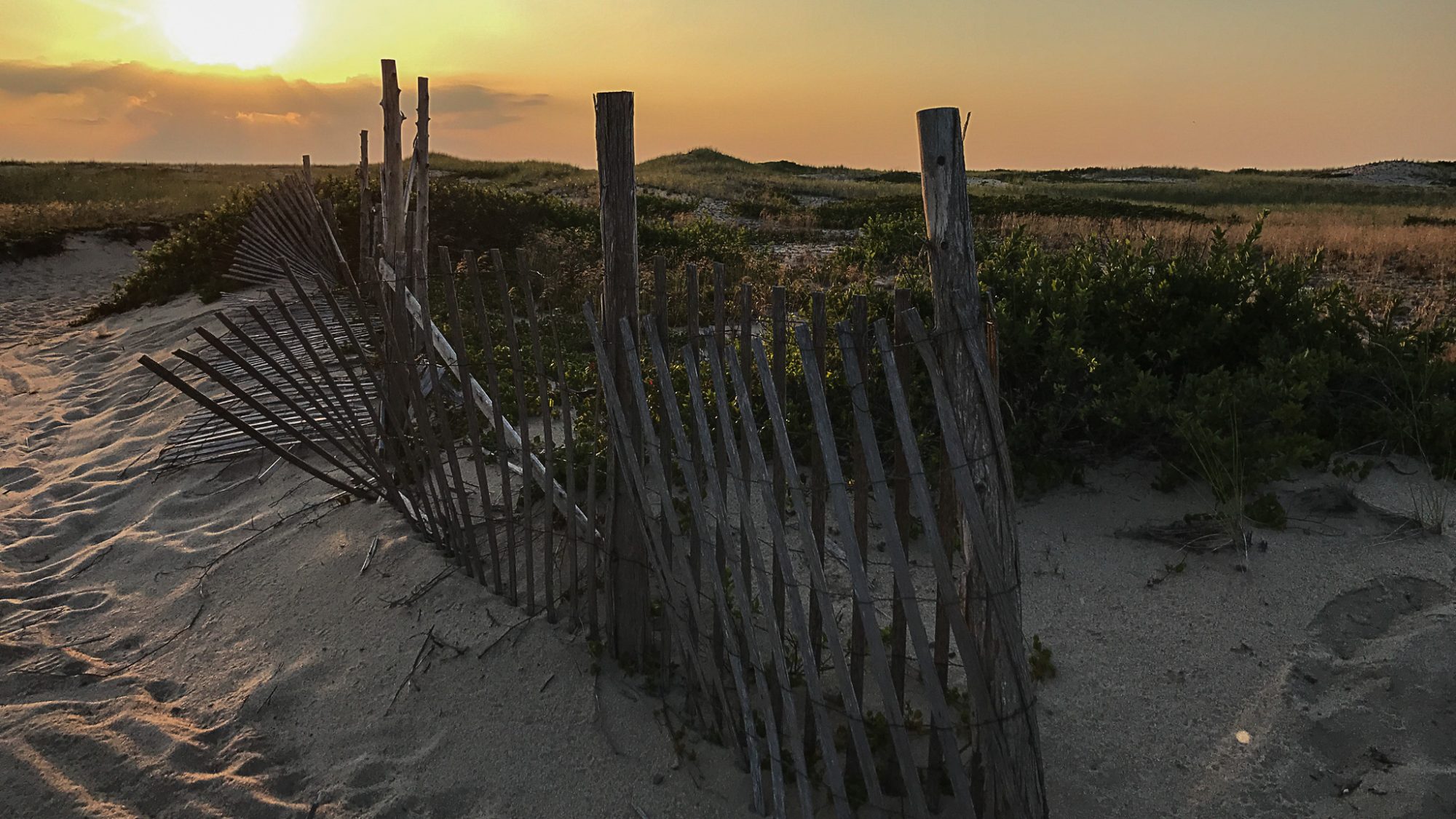
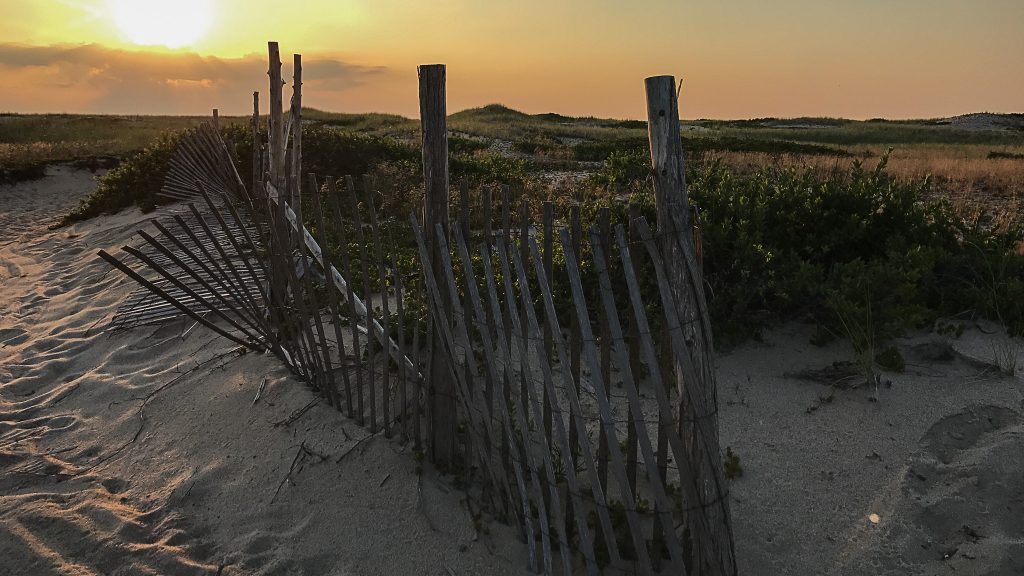
There’s a photograph I made at the dunes — late afternoon, the sun dropping fast, an old wooden sand fence leaning hard into the frame. The fence has clearly been there for years, battered by wind and salt air until it’s more suggestion than structure. It’s half-buried in places, its slats spreading at odd angles. Behind it, sea grass and beach scrub catch the last warm light, and the dunes roll back toward the horizon in long, soft curves.
I didn’t plan this image. I was walking, camera in hand, and the light hit that fence at an angle that made the whole thing come alive. The shadows it threw across the sand, the texture of the weathered wood against the softness of the dune grass, it all came together in a way that felt like Cape Cod distilled to its essence. Old, resilient, a little worn, completely beautiful.
That’s the thing about Cape Cod landscape photography that I find endlessly compelling. The interesting subjects here aren’t grand or dramatic in the conventional sense. They’re the things that have been standing up to the weather long enough to earn their character.
An Evening on the Harbor
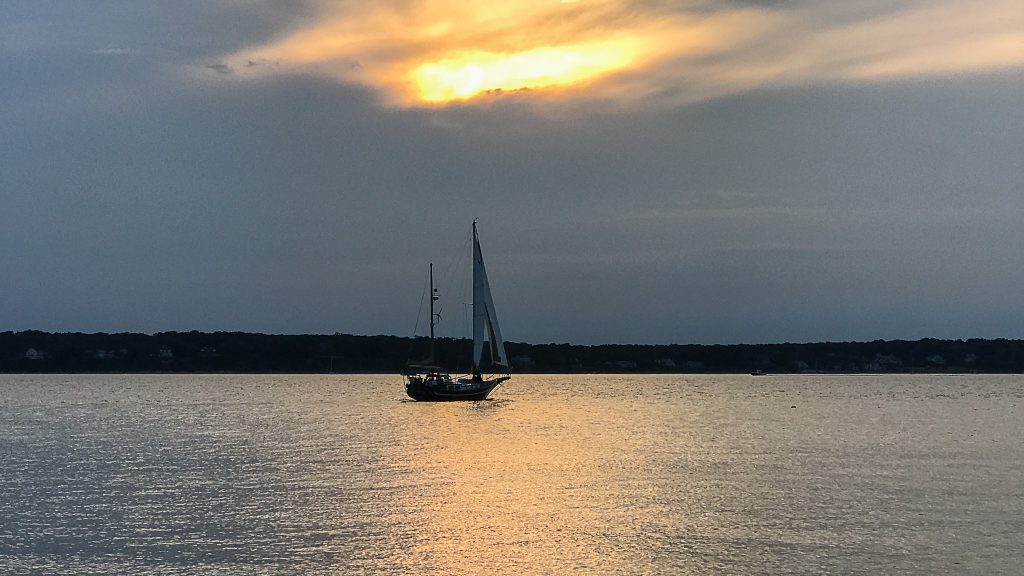
On a different trip, I was out along the harbor at Provincetown as the sun went down. The sky had gone heavy with cloud cover most of the afternoon, and I’d mostly written off the sunset. Then the clouds broke just enough to let the light through…not a clean, open sunset, but something more interesting: a concentrated burst of gold pushing through a slot in the overcast, turning the whole surface of the water metallic.
And right in the middle of all of it, a sailboat.
Single mast, full sail up, moving slowly across the frame. I had maybe a few minutes before the light shifted. I made the image.
There’s a particular quality to harbor light on the Cape that I’ve tried to describe and mostly failed. It’s cooler than Florida light, obviously, moodier, grayer in its base tone, but when warmth does come through, it hits differently. The contrast between the steel-blue water and that sudden gold feels almost earned. Like the weather made you wait for it and then paid off in full.
Highland Light, From Above
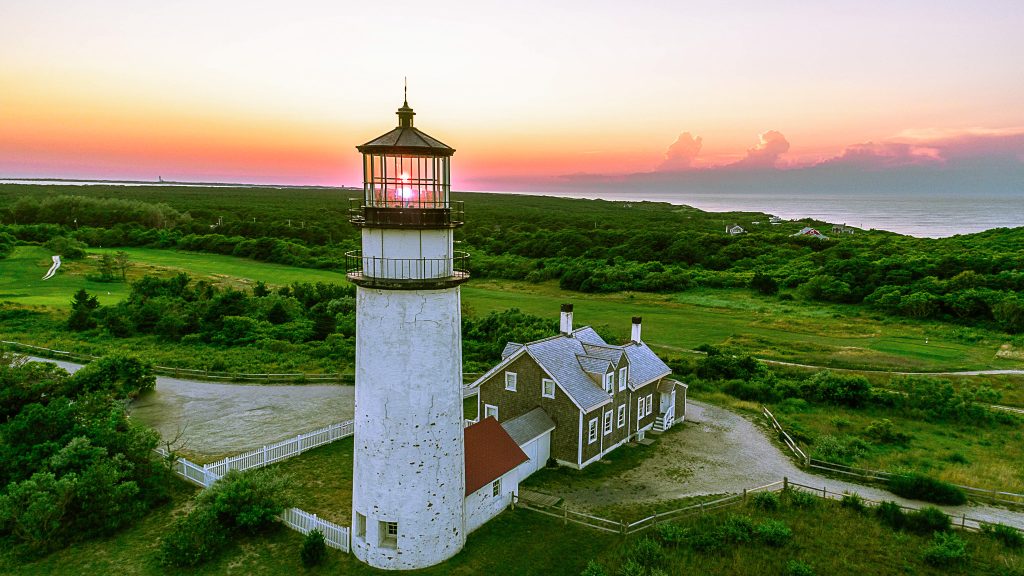
I’ve stood at the base of Highland Light in Truro more than once over the years. It’s the oldest lighthouse on Cape Cod, sitting up on the clay bluffs of the Outer Cape with the Atlantic stretching out below. The keeper’s house beside it is cedar-shingled and practical, the way everything on the Cape tends to be, built to last, not to impress.
What you can’t fully appreciate from the ground is the context. The lighthouse doesn’t sit in isolation. It’s surrounded by rolling green landscape, a golf course threading through the scrub, gravel paths and white picket fencing and the suggestion of the ocean at every edge of the frame. From above, at sunset, with the light in the tower already active and the sky going pink and amber behind it — it reads like something out of a different era entirely. Which, in a sense, it is. Highland Light has been standing since 1797, though the current tower dates to 1857. The landscape around it hasn’t changed all that much.
I’ve made a lot of aerial images over the years, and this one remains among my favorites. Not because it’s technically perfect, but because it captures something true about the place, the way history and landscape are so completely inseparable on the Outer Cape.
On Camping Here in Winter
People think of Cape Cod as a summer destination. And it is, in the sense that summer is when the crowds arrive, the restaurants are open, and the towns have their full energy running.
But I’ve camped here in winter, and that experience has shaped how I understand the place more than any summer visit.
In winter, the Cape empties out in a way that’s almost startling. Shops close. The light goes low and stays that way. The wind off the Atlantic has nothing to slow it down. And the landscape, the dunes, the beaches, the salt marshes, is completely stripped of everything soft and seasonal. What’s left is the structure of the place. The bones.
For photography, that’s often more interesting than the postcard version. The winter Cape has a severity that the summer Cape conceals. I’ve walked beaches in January where I didn’t see another person for an hour. The cold focuses you. There’s a clarity to it that I keep coming back to, literally and otherwise.
Why I Keep Returning
Cape Cod is not an easy place to explain to someone who hasn’t spent real time there. On the surface it’s a beach destination. In reality it’s a landscape with a personality, a history you can feel in the architecture and the topography, and a quality of light that photographers have been chasing for well over a century — Edward Hopper among them, who spent decades working in Truro and Wellfleet and understood something essential about what this place does to light.
I don’t compare myself to Hopper. But I understand the impulse completely.
Every time I leave the Cape, I’m already thinking about when I’ll be back. The frequency has changed over the years — sometimes it’s been a few summers in a row, sometimes a few years pass between visits. But it’s never felt finished. There are always more dunes to walk, more harbor evenings to watch, more winter mornings I haven’t photographed yet.
That’s the mark of a place worth returning to. Not that it’s always the same, but that it keeps revealing itself in new ways — and that the camera, every time, feels like the right tool for trying to hold onto it.
All images © Mark A. Middleton. markamiddleton.com
Photographs made across multiple visits to Cape Cod, Massachusetts.