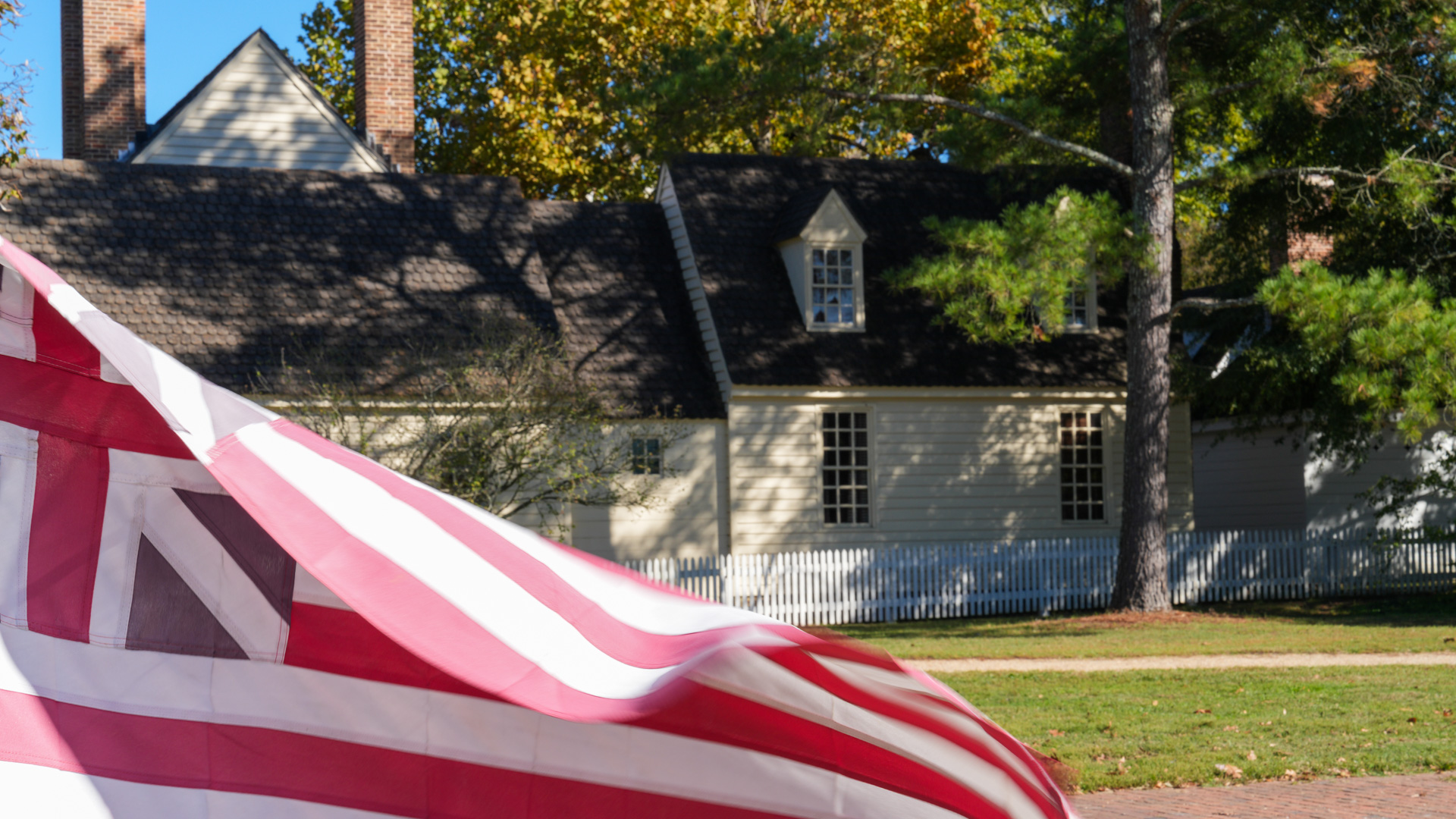
An October journey through colonial streets, centuries of history, and the beautiful grounds of William & Mary.
Travel & Photography | Virginia | By Mark A. Middleton
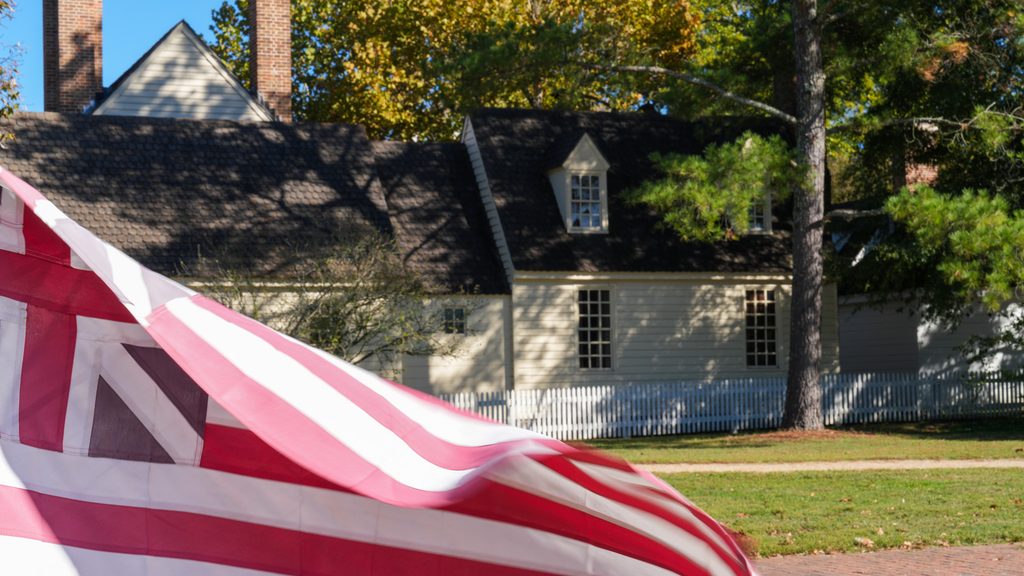
There is something special about visiting a place where history is not simply remembered but remains part of everyday life. Williamsburg, Virginia, is one of those places. Its streets, buildings, gardens, and public spaces offer a remarkable connection to the people and events that shaped our country. And unlike many historic destinations, Williamsburg invites you to do more than look at the past. It encourages you to walk through it, listen to its stories, and consider what life might have been like nearly 250 years ago.
I have traveled throughout Virginia many times over the years, and I have always appreciated the state’s extraordinary place in American history. But spending several days in Williamsburg this October gave me an even greater appreciation for what makes this particular corner of Virginia so remarkable.
I was in town for a Rotary conference, which gave me the opportunity to spend time with friends and colleagues while also exploring the city with my camera. Fortunately, I had enough time to wander beyond the conference activities, and those hours became some of my favorite memories of the trip.
Coming from the Tampa Bay area, where October still feels a lot like summer, waking up to temperatures around 42 degrees was an absolute pleasure. I stayed at the Williamsburg Lodge, and stepping outside into that crisp Virginia morning air, with the trees beginning to show their autumn colors, was exactly the change of pace I had hoped for.
There is a certain beauty to a cool fall morning, especially in a town that seems made for walking. The light comes through the trees at a lower angle, the shadows stretch across old brick pathways, and even the smallest architectural details seem to take on greater significance.
For someone who enjoys history as much as photography, Williamsburg offers an almost endless collection of subjects.
A City That Brings the American Revolution to Life
One of the most fascinating things about Williamsburg is the way its history is presented. Rather than simply walking through old buildings with plaques explaining their significance, visitors can encounter interpreters portraying historical figures, craftspeople demonstrating traditional trades, and theatrical presentations that explore the conflicts and decisions surrounding the American Revolution.
The historic district feels like an entire community devoted to telling the story of early America. There are blacksmiths, cabinetmakers, restored taverns, gardens, and remarkable examples of colonial architecture. Some of the buildings are original, while others have been reconstructed through years of historical and archaeological research. Colonial Williamsburg+1
What makes the experience so interesting is that the history unfolds around you. You can turn a corner and find a conversation about independence taking place, walk into a workshop to watch an artisan practicing a centuries-old trade, or encounter another piece of the Revolutionary story that you had never considered.
And that, to me, is what makes Williamsburg worth visiting.
So much of what we know about American history comes from books, classrooms, and documentaries. Those are valuable, of course, but there is something entirely different about standing in the places where people actually lived through these events.
The stories become more personal. The buildings become more than architecture. The decisions made centuries ago begin to feel a little closer to the present.
I particularly appreciate that Williamsburg’s interpretation of history continues to evolve, examining not only the famous political leaders of the Revolution but also the experiences of ordinary families, tradespeople, enslaved individuals, and the many others whose lives were shaped by the events of the eighteenth century.
Understanding our history means understanding its complexity, and Williamsburg offers visitors the opportunity to explore that history from multiple perspectives.
Wandering the Streets of Colonial Williamsburg
Photograph 1: Merchants Square, Williamsburg, Virginia. Insert your uploaded image Williamsburg 3.jpg here.Merchants Square, where traditional brick architecture, local shops, and the rhythm of daily life connect modern Williamsburg with its historic surroundings. Photography by Mark A. Middleton.
Some of my favorite time in Williamsburg was spent doing nothing more than walking around with my camera.
I have always preferred experiencing a destination on foot whenever possible. Walking allows me to notice the details that are easily missed from a car: an interesting doorway, the texture of old brick, the way afternoon light falls across a building, or the character of a street that has changed remarkably little in appearance over the years.
Williamsburg lends itself beautifully to this kind of exploration.
The buildings have a wonderful sense of proportion, with their steep rooflines, wooden shutters, brick facades, and modest storefronts. The streets are inviting, and the transition between the historic district and the surrounding shops and restaurants feels remarkably natural.
Merchants Square is a particularly enjoyable place to spend time. Its traditional architecture complements the historic surroundings, while its restaurants, shops, and gathering places make it feel like a living part of the city rather than simply an extension of a historic attraction.
It is also a reminder that preserving the past does not mean a place has to stop evolving.
There is something appealing about seeing people enjoying lunch, meeting friends, or browsing a bookstore in a setting that reflects the architectural traditions of colonial Virginia. Williamsburg manages to feel both historic and contemporary, and that balance is part of its charm.
For photography, the changing light throughout the day adds another dimension. Even familiar streets can look entirely different in the early morning or late afternoon, especially when the autumn sun filters through the trees.
Walking Through History at William & Mary
One of the highlights of my visit
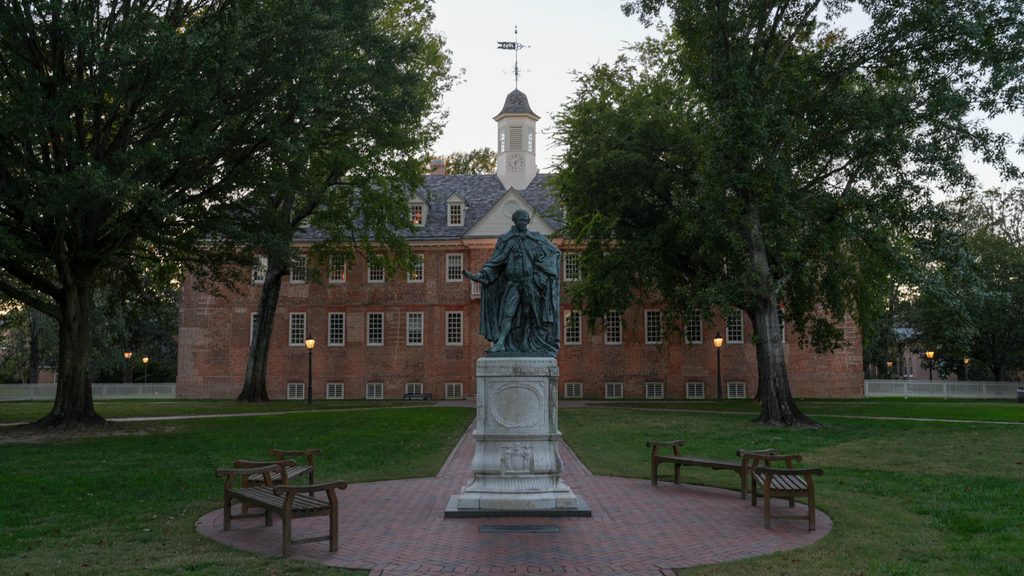
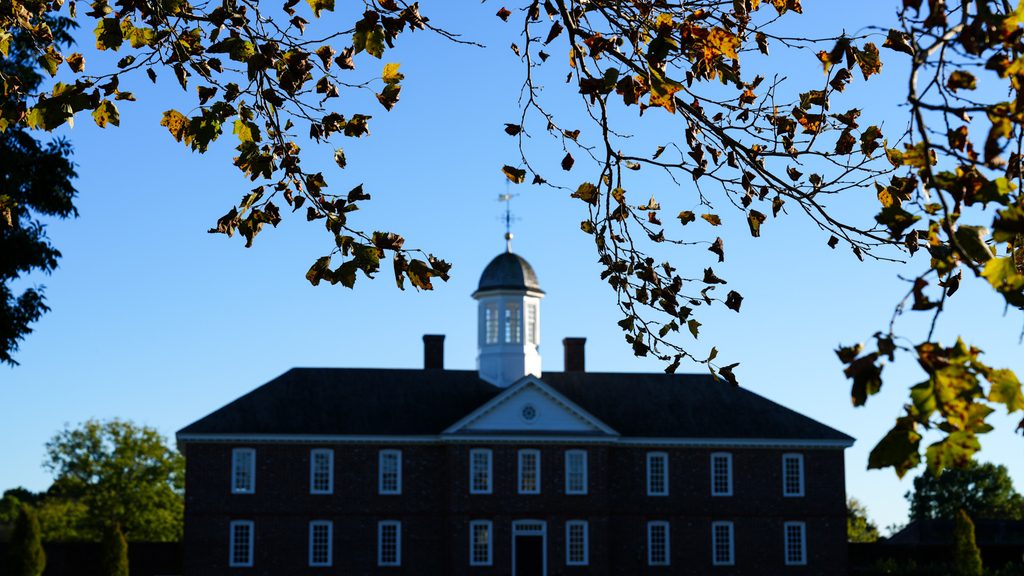
The historic Wren Building at William & Mary, framed by mature trees and the statue of Lord Botetourt. Photography by Mark A. Middleton.
One of the places I was particularly interested in exploring was the campus of William & Mary.
As someone who studied history in college, I find places like this fascinating. William & Mary was founded in 1693, making it the second-oldest institution of higher education in the United States, after Harvard. Its history is deeply intertwined with the earliest chapters of our country, and walking through the campus is an experience in itself.
At the heart of the historic campus stands the Sir Christopher Wren Building, constructed between 1695 and 1700. It is the oldest college building still standing in the United States, and remarkably, it continues to serve the university today. William & Mary+1
Standing in front of the Wren Building, looking at its brick exterior, symmetrical windows, and distinctive cupola, I found myself thinking about the generations of students who have passed through its doors.
Thomas Jefferson attended William & Mary, as did James Monroe and John Tyler. These were individuals whose lives would become inseparable from the history of the United States. Yet at one point, they were simply young students walking across a campus, attending classes, and trying to understand the world around them.
I find that connection remarkable.
It is easy to look at historic figures as if they existed only in the pages of textbooks. Visiting the places where they studied and lived is a reminder that they were real people, making decisions and navigating the uncertainties of their own time.
The grounds surrounding the Wren Building are beautiful, with brick pathways, magnificent trees, and an architectural character that reflects more than three centuries of academic tradition.
I photographed the building with the statue of Lord Botetourt standing prominently in the foreground. The composition seemed to capture so much of what I appreciated about the campus: the relationship between history, architecture, and the natural surroundings.
What impressed me most was that William & Mary does not feel like a preserved historical exhibit. It remains a thriving university. Students continue to walk these paths and attend classes, adding their own experiences to a story that began long before the United States existed.
The Unexpected Beauty of Crim Dell
A quieter side of the campus
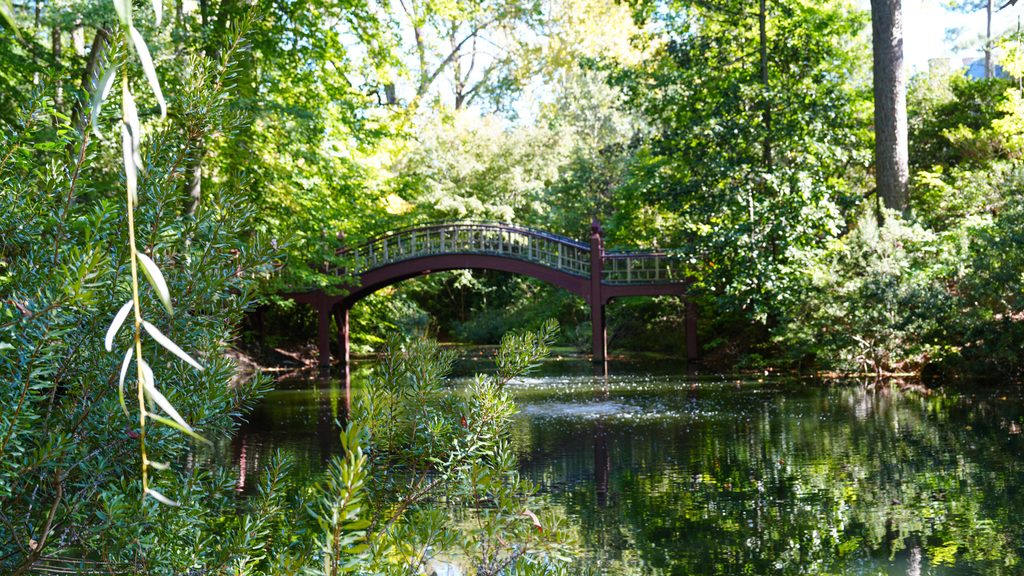
Crim Dell Bridge, surrounded by woodland and reflected in the water below. One of the most picturesque corners of William & Mary. Photography by Mark A. Middleton.
Not every memorable part of a historic destination involves a famous building or monument. Sometimes the places that stay with me most are the quieter ones.
While exploring the William & Mary campus, I came across Crim Dell, a wooded natural area with a picturesque footbridge spanning a small pond.
The bridge, with its graceful arch and decorative railings, feels almost hidden among the surrounding trees. It is one of those places that immediately makes you want to stop and take a photograph.
The Crim Dell landscape was dedicated in 1966, and the bridge was a gift from the Class of 1964. Over the years, it has become one of the university’s most beloved landmarks, complete with its own campus traditions and legends. William & Mary
For me, its appeal was primarily visual.
The dark structure of the bridge against the green foliage, the reflections in the water, and the layers of vegetation surrounding the pond created a beautiful natural composition.
It was an interesting contrast to the brick buildings and formal landscapes elsewhere on campus. Within a short walk, the atmosphere changed from historic architecture and open lawns to a peaceful woodland setting.
These are the moments I appreciate when traveling with a camera. You might set out to photograph one thing and find that something entirely unexpected becomes just as memorable.
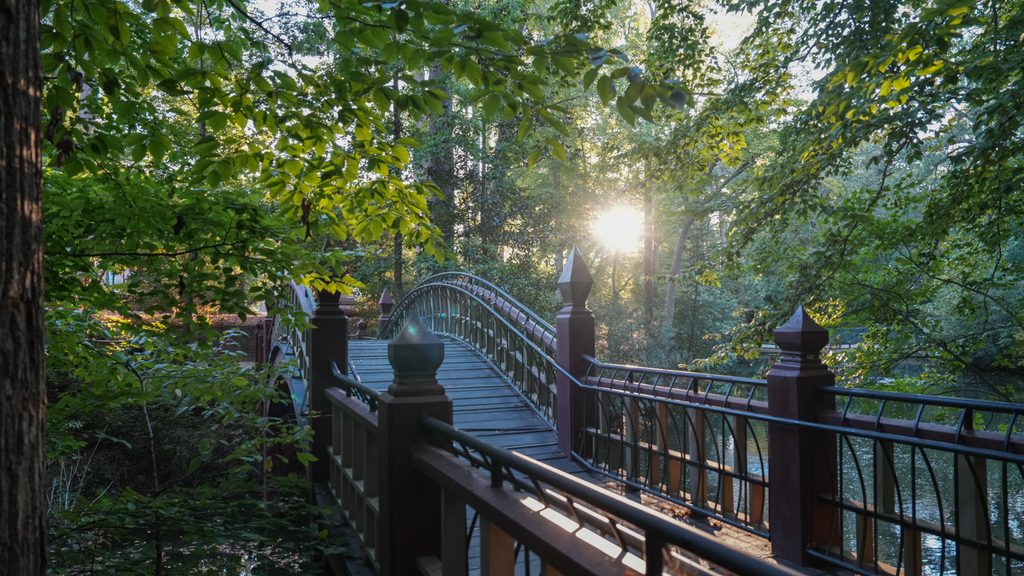
Late afternoon sunlight passing through the trees along Crim Dell Bridge. A different perspective reveals the quiet beauty of the campus woodland. Photography by Mark A. Middleton.
I photographed the bridge from more than one perspective. From across the pond, its arch became the focal point, surrounded by the reflections of the trees. Closer to the structure, the sunlight filtering through the canopy created an entirely different image.
The shadows were deeper, the lines of the railings became more prominent, and the bridge seemed to lead directly into the woodland beyond.
I enjoy photographing places this way, looking for different compositions rather than taking a single photograph and moving on. Often, it is the second or third perspective that tells a more interesting story.
For visitors to William & Mary, I would certainly recommend taking the time to explore this part of the campus. It is a wonderful place to walk, particularly during the fall when the changing leaves and softer sunlight add even more character.
A Connection to the People Who Shaped America
History beyond the classroom
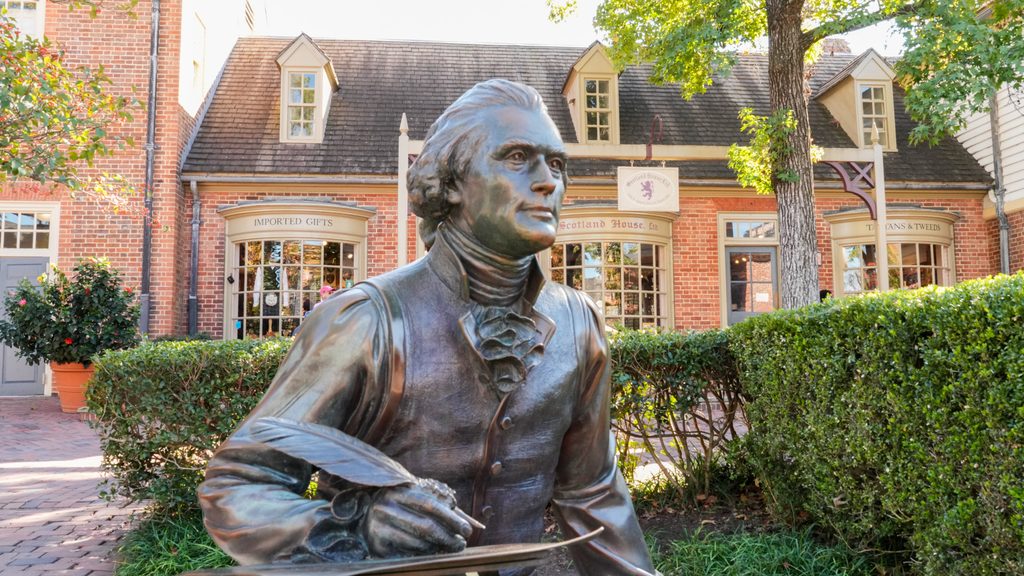
A bronze statue of Thomas Jefferson in Williamsburg, an opportunity to reflect on the people and ideas that helped shape the American republic. Photography by Mark A. Middleton.
Another photograph I particularly enjoyed making was of Thomas Jefferson’s statue, set against the traditional brick architecture of Williamsburg.
Jefferson has always been one of the most fascinating figures in early American history to me. His intellectual curiosity, political philosophy, architectural interests, and role in shaping the nation make him an extraordinary subject of study. Like many of the founders, his legacy also contains profound contradictions, particularly his writings about liberty alongside his lifelong participation in slavery.
Williamsburg offers an opportunity to consider those complexities in the places where many of the ideas behind American independence were debated and developed.
There is something powerful about visiting a town where so many important conversations took place. The arguments over representation, taxation, independence, and individual liberty were not abstract political exercises. They concerned the future of a society whose people could not know how events would unfold.
I think that is one of the reasons I enjoy visiting historic places so much. History becomes more meaningful when we remember that the people who lived through it had no idea how their stories would eventually be told.
They were living in the present, just as we are today.
The Pleasure of an October Morning in Virginia
I would be remiss if I didn’t mention just how much I enjoyed the weather.
Living in Florida, I appreciate our sunshine and warm temperatures, but there is something refreshing about traveling north in October. Waking up at the Williamsburg Lodge to temperatures around 42 degrees was a wonderful change from Tampa Bay.
I loved being able to step outside into the cool morning air, put on a jacket, and enjoy the kind of weather that makes you want to spend the entire day outdoors.
The Williamsburg Lodge was an excellent place to stay. Its location made it easy to explore much of the historic area on foot, which is always a priority for me when traveling. I would much rather walk through an interesting neighborhood or historic district than spend my time navigating traffic and searching for parking.
The surrounding landscape was just beginning to take on the colors of autumn, and the cooler weather made every walk enjoyable.
For someone who spends a considerable amount of time traveling, I have come to appreciate these smaller details as much as the famous attractions. Sometimes a great trip is remembered not only for what you saw, but also for how it felt to be there.
In Williamsburg, that feeling was one of slowing down and enjoying the surroundings.
An Easy Escape From Tampa Bay
One of the things that surprised me was just how practical Williamsburg is as a destination for those of us living in the Tampa Bay area.
It can feel as though experiencing a completely different atmosphere requires traveling across the country or overseas. But Williamsburg is close enough for a long weekend, especially when flying into one of the regional airports serving southeastern Virginia.
Within a relatively short trip from Florida, you can exchange palm trees and warm Gulf Coast weather for colonial streets, fall foliage, centuries-old architecture, and the crisp temperatures of autumn.
There is also plenty to explore beyond Williamsburg itself. Jamestown and Yorktown are nearby, creating an extraordinary opportunity to experience three places that tell interconnected chapters of early American history.
For families, history enthusiasts, photographers, or anyone simply looking for a different kind of weekend away, I think Williamsburg is a wonderful choice.
And while the history is certainly the main attraction, it is not the only reason to visit. The restaurants, shops, university campus, walking paths, and surrounding countryside make it a destination with much more variety than I had anticipated.
Why I Will Return
Over the years, I have been fortunate to photograph places all over the world, from historic European cities to remote communities and landscapes far removed from the familiar surroundings of home.
Yet some of the most rewarding destinations are much closer than we realize.
Williamsburg reminded me of that.
I came for a Rotary conference and left with a greater appreciation for a city that has done an extraordinary job of preserving and interpreting its history. I enjoyed the architecture, the natural beauty of the William & Mary campus, the cool fall weather, and the simple pleasure of walking through a place where nearly every corner offered something interesting to discover.
I also came home with photographs that I will enjoy revisiting, not simply because of what they depict, but because of the memories associated with making them.
That is what photography has always meant to me. It is a way of paying attention to the world, of documenting places that matter, and of preserving moments that might otherwise pass too quickly.
Williamsburg is a destination I would happily recommend, particularly to anyone with an interest in American history. But even if history is not your primary motivation for traveling, I suspect you will find plenty to appreciate.
I certainly did.
And the next time I return to Virginia, I plan to make room in my itinerary for another walk through Williamsburg, another visit to William & Mary, and perhaps a few more photographs along the way.
There is still much more I would like to see.
My visit to Williamsburg was another reminder of how much I enjoy discovering places where history, architecture, and everyday life come together. As a photographer and lifelong student of history, I am always looking for opportunities to explore and document places that have a story to tell. I invite you to explore more of my travel photography, where I share images and experiences from my journeys around the world, or visit my Substack journal for additional stories about history, travel, and the places that inspire me. When I’m home in Florida, I also enjoy documenting the historic neighborhoods and architecture of the Tampa Bay area through Historic Homes Tampa Bay and Discover Delightful Dunedin. Whether we share an interest in photography, American history, or travel, I always welcome the opportunity to connect.