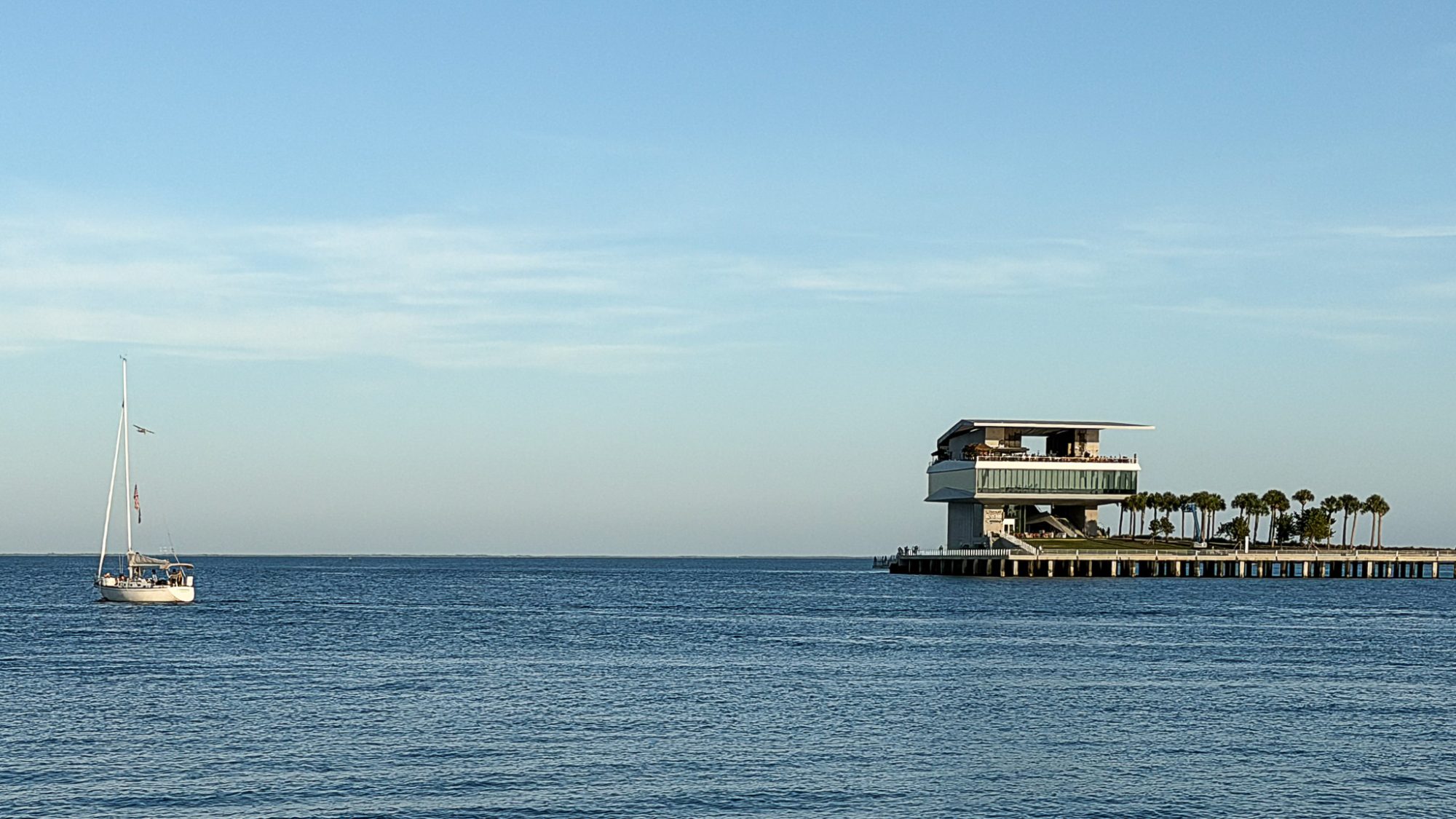
One of the things I love most about photography is that it slows you down.
Not artificially. Not in a forced or curated way. It simply changes the way you move through the world. You stop rushing. You notice details. You pay attention to light, texture, movement, architecture, and people. Photography teaches observation, and observation changes everything.
Last night, after finishing up at one of my listings in the Crescent Lake neighborhood that will be returning to the market next week, I decided I wasn’t quite ready to head home. It was one of those warm Florida evenings where the air feels calm and the sky begins shifting colors just before sunset. So instead, I drove downtown.
I parked my Jeep near Vinoy Park around 7 p.m. and started walking toward the waterfront.
Almost immediately, the pace of life changed.
The seawall along downtown St. Petersburg has become one of the most enjoyable walks anywhere on Florida’s Gulf Coast. Boats moved quietly across Tampa Bay. Couples leaned against the railing talking. Cyclists passed by. Families wandered toward the pier. The city felt alive without feeling rushed.
And that’s one of the reasons downtown St. Petersburg has become such a magnetic place for people from all over the country.
It isn’t just growth.
It’s atmosphere.
It’s lifestyle.
It’s the feeling you get while standing along the water as the lights begin turning on across the skyline.
The St. Pete Pier at Dusk
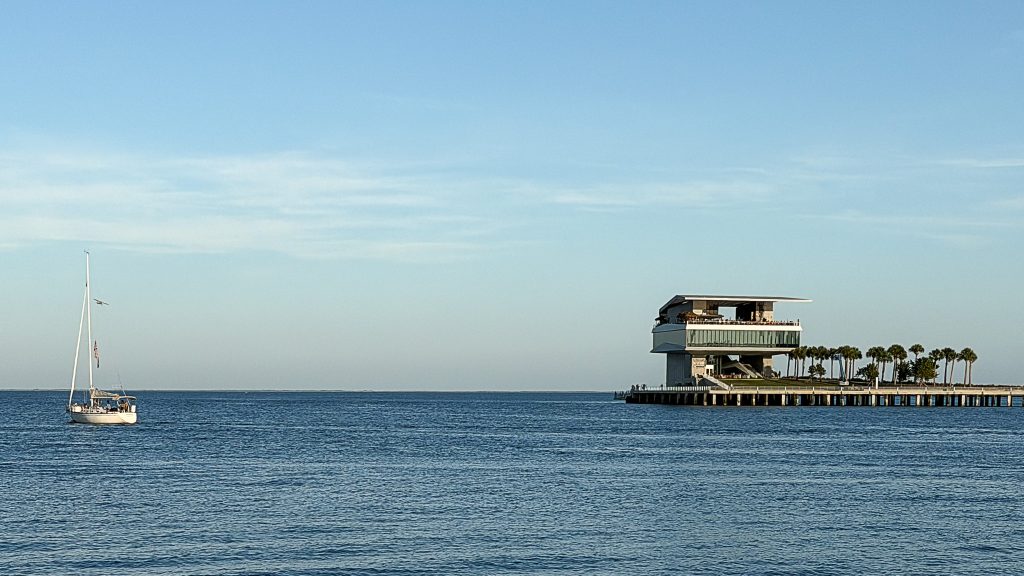
As I walked farther along the waterfront, the St. Pete Pier began glowing in the distance.
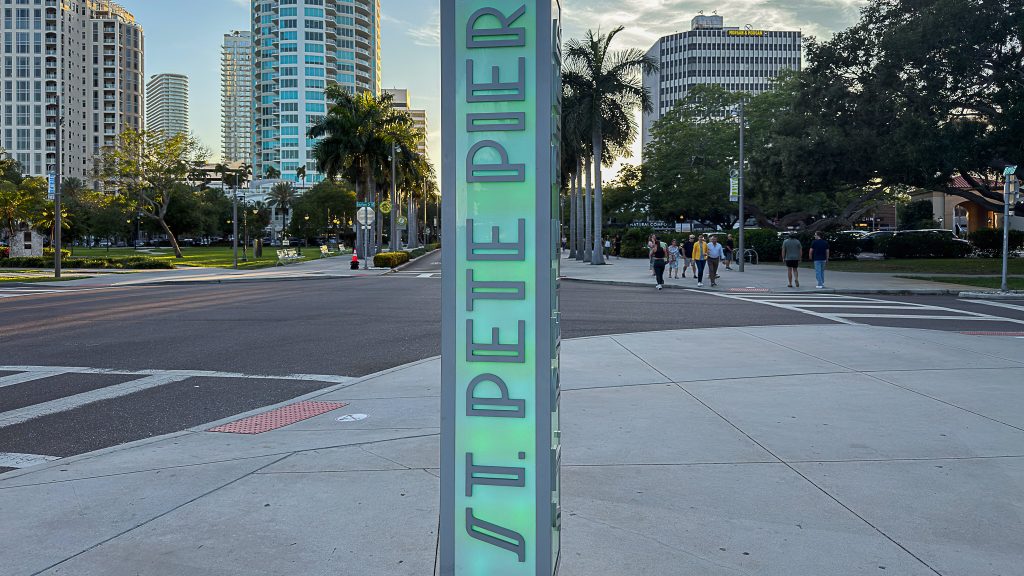
The modern pier has become one of the defining architectural landmarks of Tampa Bay. The current design opened in 2020 and completely reimagined the waterfront experience for residents and visitors alike. Instead of functioning simply as a traditional pier, it became a destination — part park, part public gathering space, part architectural statement.
What I appreciate most about it photographically is how different it looks depending on the time of day. In the evening, especially around sunset, the structure takes on a softness against the water and sky. The lighting changes by the minute. Boats drift through the foreground. Reflections start to appear in the water. It becomes cinematic.
I stopped several times just to watch the boats moving through the bay.
There’s something grounding about that view.
The openness of Tampa Bay.
The sound of water against the seawall.
The quiet rhythm of people simply enjoying where they live.
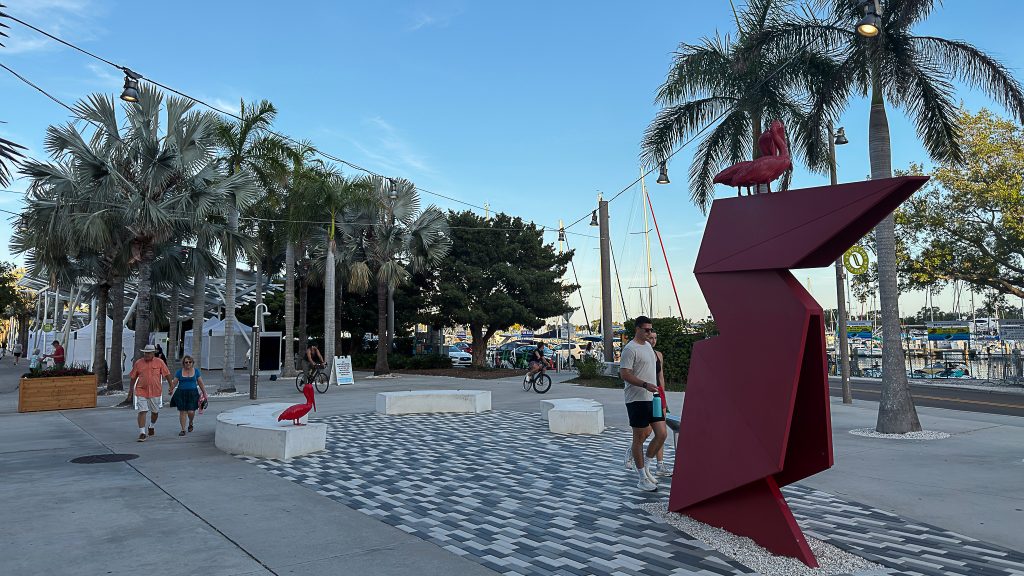
The Vinoy Resort and the Soul of Historic St. Petersburg
From there, I turned back toward Beach Drive and photographed the Vinoy Resort.
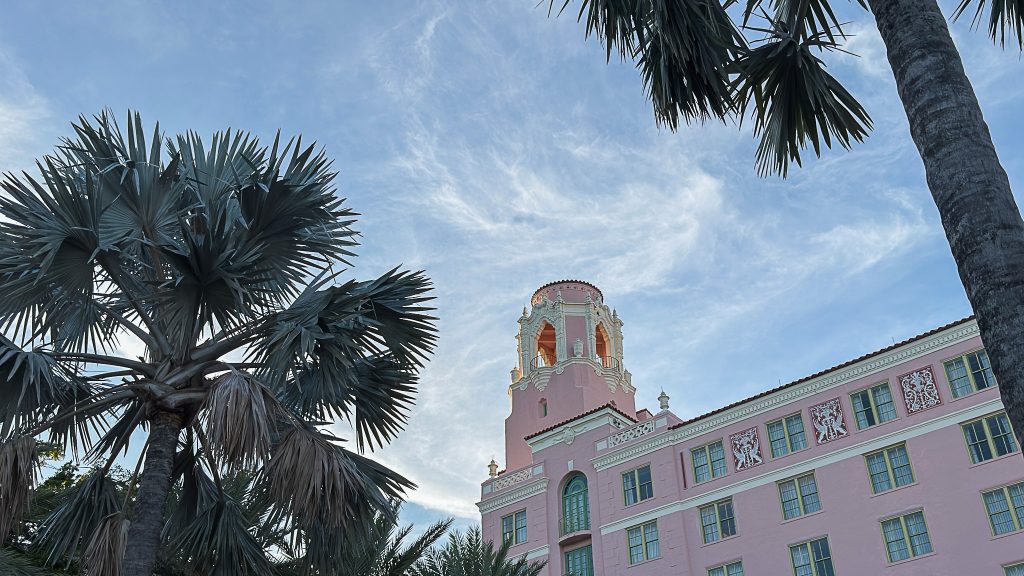
The Vinoy is more than just a hotel.
It’s part of the identity of St. Petersburg.
Originally opened in 1925 during Florida’s great land boom, the Mediterranean Revival masterpiece quickly became one of the most important luxury destinations in the Southeast. Over the decades, it welcomed celebrities, politicians, athletes, and travelers escaping northern winters for the warmth of Florida’s Gulf Coast.
Its pink façade has become iconic.
But beyond the architecture, the Vinoy represents something deeper about St. Petersburg — the city’s blend of elegance, coastal charm, history, and reinvention.
The park in front of the Vinoy may be one of the most underrated public spaces in Florida.
Massive oak trees stretch overhead with lights hanging through the branches in the evening. Renaissance-style sculptures sit quietly among walking paths and benches. People stroll slowly beneath the trees while conversations drift through the warm air from nearby restaurants and sidewalk cafés.
It doesn’t feel overdeveloped.
It feels human.
Walkable cities are becoming increasingly rare in America, but downtown St. Petersburg still feels connected to people rather than simply traffic patterns.
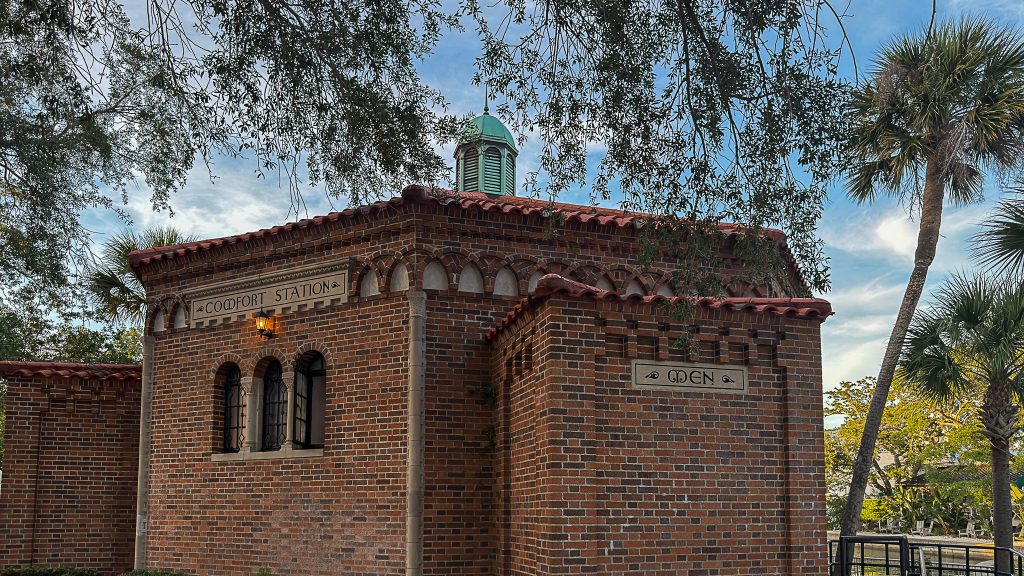
The Historic Comfort Station
As I continued toward the pier, I passed the historic Comfort Station.
Most people walk right past it without realizing the history attached to the building.
Constructed in the 1920s, the Comfort Station is one of the few remaining reminders of the city’s early waterfront development era. During a time when St. Petersburg was rapidly transforming into a winter resort destination, public structures like this were designed not merely for function, but with architectural character and permanence.
The brickwork, arched windows, decorative detailing, and Mediterranean influences reflect an era when civic architecture mattered.
Even a public restroom building was expected to contribute beauty to the city.
That idea feels almost foreign today.
Yet somehow St. Petersburg still preserves pieces of that older philosophy — that cities should feel artistic, inviting, and memorable.
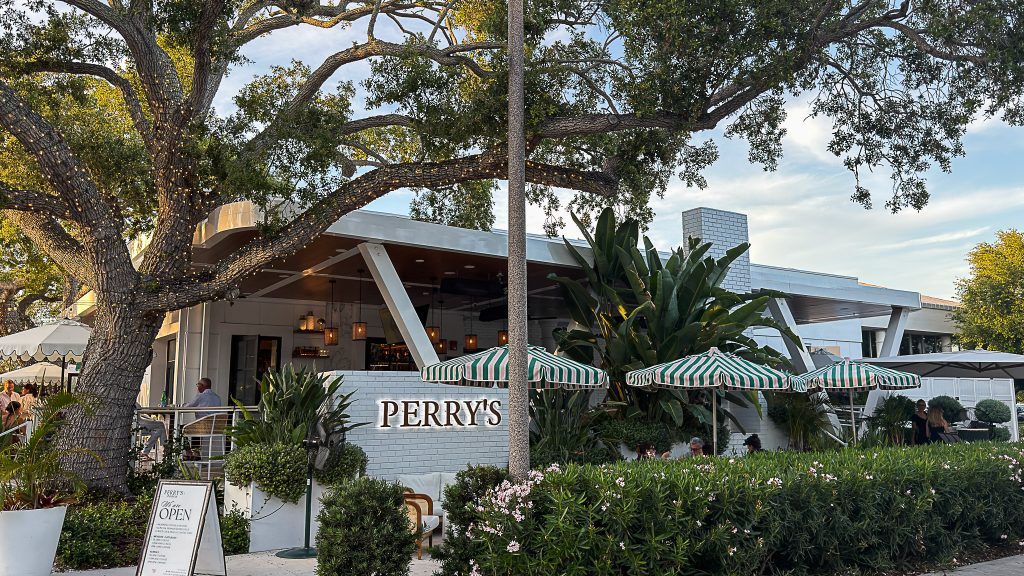
Perry’s Porch and the Energy of Beach Drive
Near the base of the pier, I photographed Perry’s Porch.
Beach Drive at night has its own personality.
You hear music floating from open-air restaurants. People laugh over dinner. Outdoor patios stay busy late into the evening. There’s movement everywhere, but it never feels chaotic.
That’s what separates St. Petersburg from many larger cities.
It still feels approachable.
There’s sophistication here now — luxury condominiums, upscale dining, major museums, expanding development — but there’s still a relaxed coastal rhythm underneath it all.
South Straub Park and Community Life
As I headed west from the pier, I walked past South Straub Park.
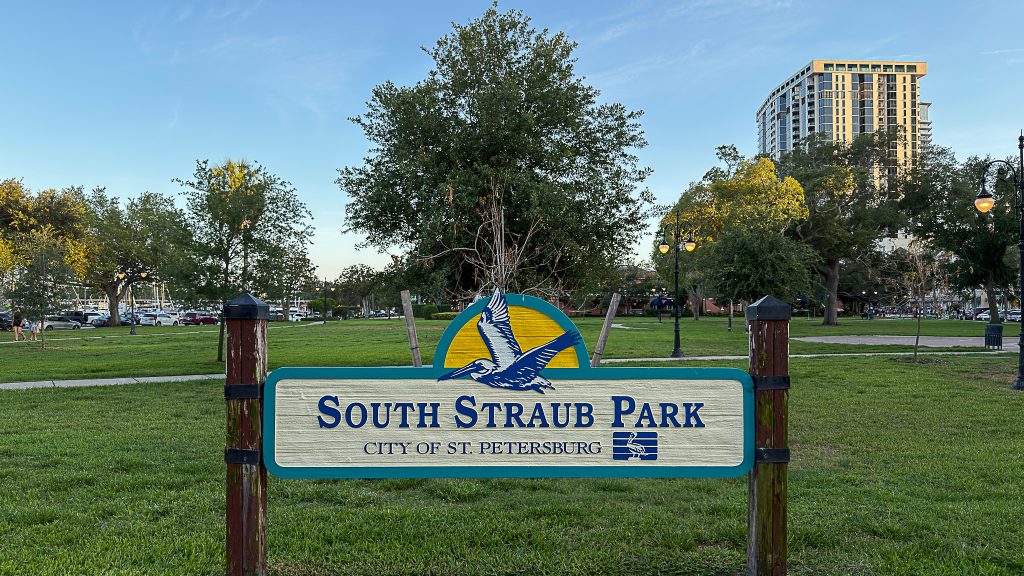
This park has quietly become one of the city’s cultural gathering spaces.
Concerts, art festivals, holiday events, performances, outdoor movies, and community gatherings happen here throughout the year. Last year, I watched a Shakespeare performance there by a local theater group, sitting outdoors beneath the trees while downtown lights glowed around the park.
Moments like that are why people fall in love with St. Petersburg.
Not because of one building.
Not because of one restaurant.
Not because of one development project.
It’s the layering together of all these experiences.
Downtown Living and the Future of St. Petersburg
Eventually, I made my way toward Sundial.
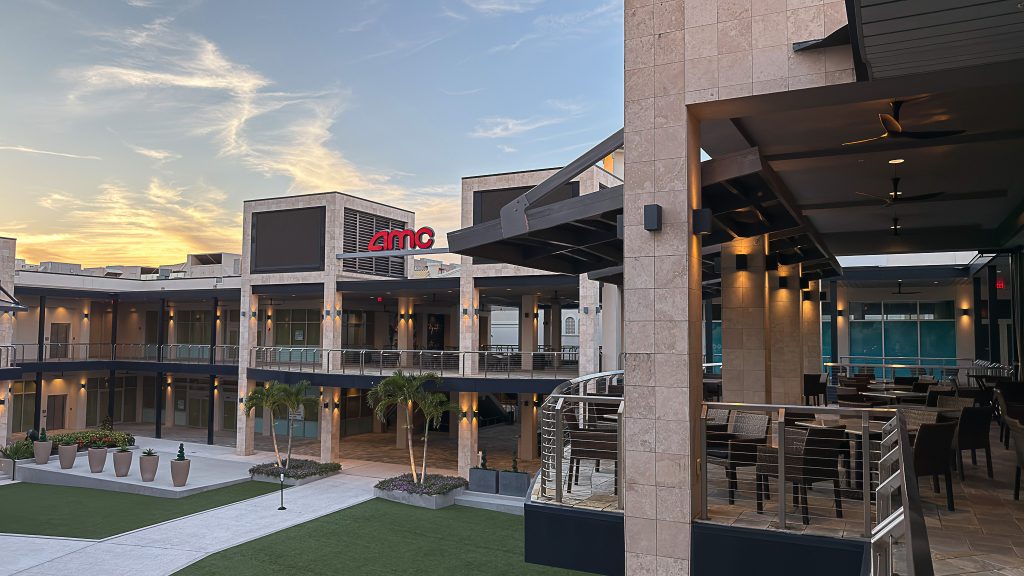
I had dinner at Ruth’s Chris Steak House on the second floor overlooking the courtyard near the AMC theater. It was one of those simple evenings that ends up staying with you longer than expected.
No rush.
No schedule.
No pressure.
Just walking, observing, photographing, and thinking.
As I walked back afterward, I watched people sitting at cafés talking over dinner while musicians played nearby. Downtown felt alive in a way that many cities strive for but never quite achieve.
And it’s only continuing to evolve.
Projects like 400 Central and the future Roche Bobois tower are reshaping the skyline and bringing even more attention to downtown St. Petersburg as a luxury destination city. At the same time, neighborhoods like Crescent Lake and Old Northeast continue preserving the historic character that gives the city depth and personality.
That combination matters.
New development alone does not create soul.
History does.
Architecture does.
Public spaces do.
Walkability does.
Community does.
Why Photography Matters
Photography isn’t always about creating the perfect image.
Sometimes it’s simply about paying attention.
Last night reminded me that some of the best evenings are the unplanned ones — walking through a city with a camera in your hand, noticing light changing on buildings, hearing distant music, and remembering why certain places continue to inspire people generation after generation.
Downtown St. Petersburg is one of those places.
And on evenings like this, it becomes very easy to understand why people choose to live, work, and build their lives here.
#DowntownStPete #StPetersburgFlorida #StPetePier #VinoyResort #BeachDrive #TampaBayPhotography #FloridaPhotography #HistoricStPetersburg #StPeteRealEstate #LuxuryLiving #WaterfrontLifestyle #OldNortheast #CrescentLake #MarkMiddleton #MiddletonTampaBay #FloridaArchitecture #StPeteLifestyle #UrbanPhotography #TampaBayLiving #StPeteAtNight